
Renting in Bali is the goal for many digital nomads, remote workers, and families ready to trade routine for island life. And the listings look incredible: private pools, rice field views, open-air bedrooms, and a pace of life that makes the whole idea seem almost effortless.
The thing is, a photo can’t tell you whether the access road floods every November, or whether the property next door runs a generator until midnight. It won’t show damp creeping up the bedroom wall, or explain what “yearly payment upfront” means for your budget.
For foreigners planning a long-term move, that gap is where most plans fall apart. This guide walks you through what to verify before you commit. After all, doing the groundwork early is the difference between a good decision and a bitter regret.
If moving to Bali is on your radar, keep reading.
Why Renting in Bali Is Harder Than the Listings Make It Look
Browse any popular listing site, and you’ll find hundreds of Bali villas with gleaming pools and lush outdoor space. Every picture makes the property look like a five-star retreat, so finding a place seems easy.
You feel like all you need to do is pick a villa, sign a lease, and start living in Bali. Simple enough, right? Well, the thing nobody tells you is that listing photos are shot with the best possible light. The photographer even carefully frames every angle to hide anything unflattering.
So what you end up seeing is a version of the truth. A basic room with poor ventilation becomes “cozy and private.” And a property sitting three meters from a busy road becomes “conveniently located.” In reality, long-term rentals here vary wildly in actual condition, and cutting corners on research at this stage costs far more than the rent itself.
A polished listing tells you almost nothing about noise, access, damp, or lease conditions. Those details live outside the frame, and that is exactly where your research needs to start.
Location Tells You More Than Any Photo Can

A villa can look perfect on screen. But where it sits on the island impacts your daily life in ways a photo never could. Here’s what you find once you show up in person
Temple Drums, Warung Smoke, and the Rice Field View You Weren’t Told About
Rice terraces are genuinely beautiful to live near, and yes, they do exist in Bali exactly as advertised. But they also come with roosters at dawn, smoke from nearby warungs (small local food stalls that often burn wood or charcoal), and seasonal flooding that no listing mentions.
On top of that, temples hold ceremonies throughout the year, sometimes running past midnight with gamelan music you can hear clearly from three streets away. For digital nomads and remote workers trying to keep a consistent schedule, that kind of noise disruption is worth a serious conversation with the landlord.
That Cute Gang Road Becomes a River When the Rain Hits
Narrow gang roads (small, unnamed alleyways) in popular areas like Seminyak flood regularly between October and April, sometimes cutting off the house for hours at a stretch.
Not to mention, some properties are only reachable by motorbike year-round. This creates issues like delayed deliveries, impossible airport runs with full luggage, and no vehicle access for families moving larger items. Families and expats coming from other parts of the world rarely account for this until they are already dealing with it.
Bottom Line: Dry season visits tell you almost nothing about wet season access. Your best chance of spotting these issues is asking locals directly and checking the road on foot.
What Long-Term Renters Wish They’d Checked First
Many renters in Bali lose money on details inside the property, rather than just on location decisions. And most of these details are hiding in plain sight.
Take a look at what gets missed often:
- Damp and Mold in the Bedroom: Whenever you walk through a villa, run your hand along the lower walls and check behind furniture. Ground-floor bedrooms collect moisture fast in Bali’s climate, and most landlords won’t volunteer that information upfront.
- Utility Fees: Some furnished rentals bundle utilities into the rent; others charge separately at rates that can double your monthly cost (yep, those sneaky bits everyone forgets). That’s why you should always ask for the last three months of electricity and water bills. This way, you know exactly what you’re paying.
- Pool Maintenance Responsibility: Tenants cover private pool and swimming pool upkeep in most cases, instead of landlords. For a villa with outdoor space and a pool, that adds $50 to $150 to your monthly budget depending on size.
None of these checks requires expert knowledge. You just need to ask the right questions in person.
Stay a Week as a Local Before You Sign a Year as a Resident
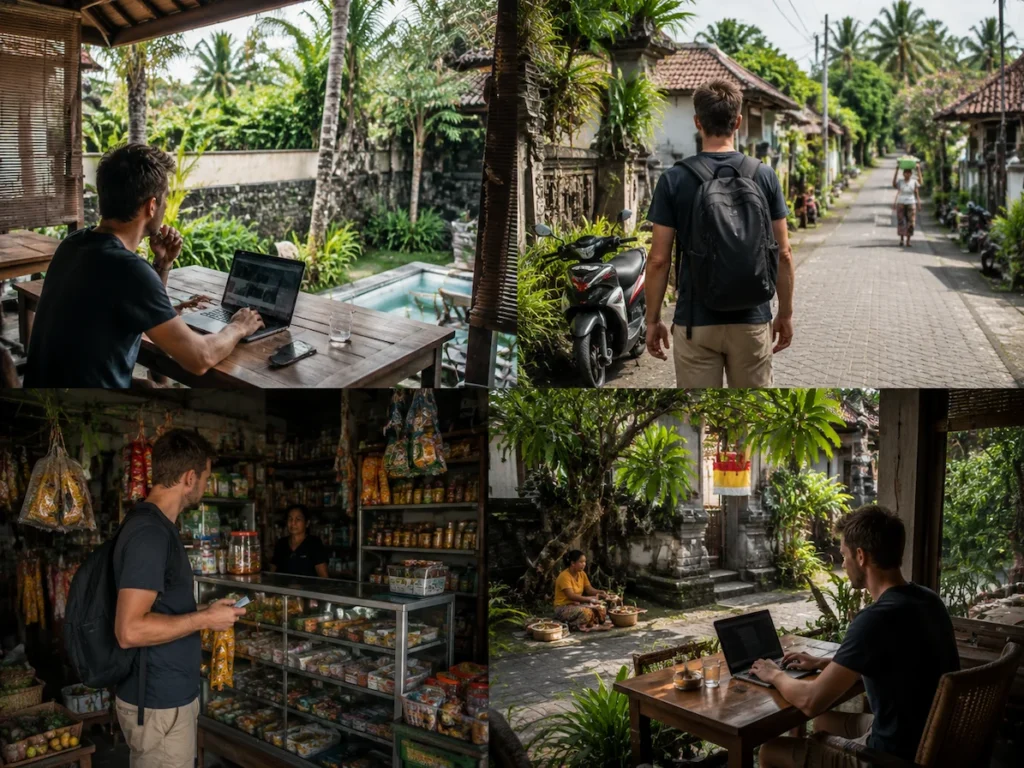
Look, we get it. Committing to a year-long lease in a country you’ve only visited on holiday feels like a leap of faith. But a short-term stay costs a fraction of what a broken lease will set you back, and it tells you things no listing ever could.
We recommend spending a few months exploring Bali as a visitor first if you can. If time is tight, even one week in the neighborhood you’re considering gives you ground-level data.
So show up on a Tuesday morning and check whether the Wi-Fi holds up during working hours. Then walk to the nearest grocery store, sit in the outdoor space, and pay attention to what you can hear around you. By the end of that week, you’ll know if the property fits your life or just looks good in photos.
Remote workers and digital nomads who skip this step often discover the Bali lifestyle they imagined looks very different from the one they land in. And that isn’t a criticism of Bali. Island life here is genuinely wonderful. It’s just that long-term living runs on a completely different rhythm than a two-week vacation does.
Lease Terms in Bali: What “Standard” Actually Means
Standard lease terms in Bali will surprise most foreigners. The payment structure is nothing like what most Western rental markets use, and the fine print inside the contract raises its own set of questions. Both are worth understanding before you commit to anything.
Most Bali Leases Run a Year Minimum, and You Pay It All Upfront
If you’re moving to Bali long-term, the payment structure here will likely catch you off guard. And that’s putting it mildly.
Yearly contracts are the norm, and landlords expect the full amount at signing. Monthly options exist in rare cases, and negotiating one is rarer still.
So if you find a property you want, you need to be ready to pay the full amount. Arriving without the full yearly sum ready means losing the property to the next interested renter (and yes, we’ve seen people lose a full year’s rent over this).
On top of that, early exit terms are hard to enforce. If your plans shift, you’re unlikely to recover that money. That’s why you should treat the upfront cost as a fixed commitment from day one, rather than a flexible arrangement you can revisit.
The Lease Questions Most Renters Forget to Ask
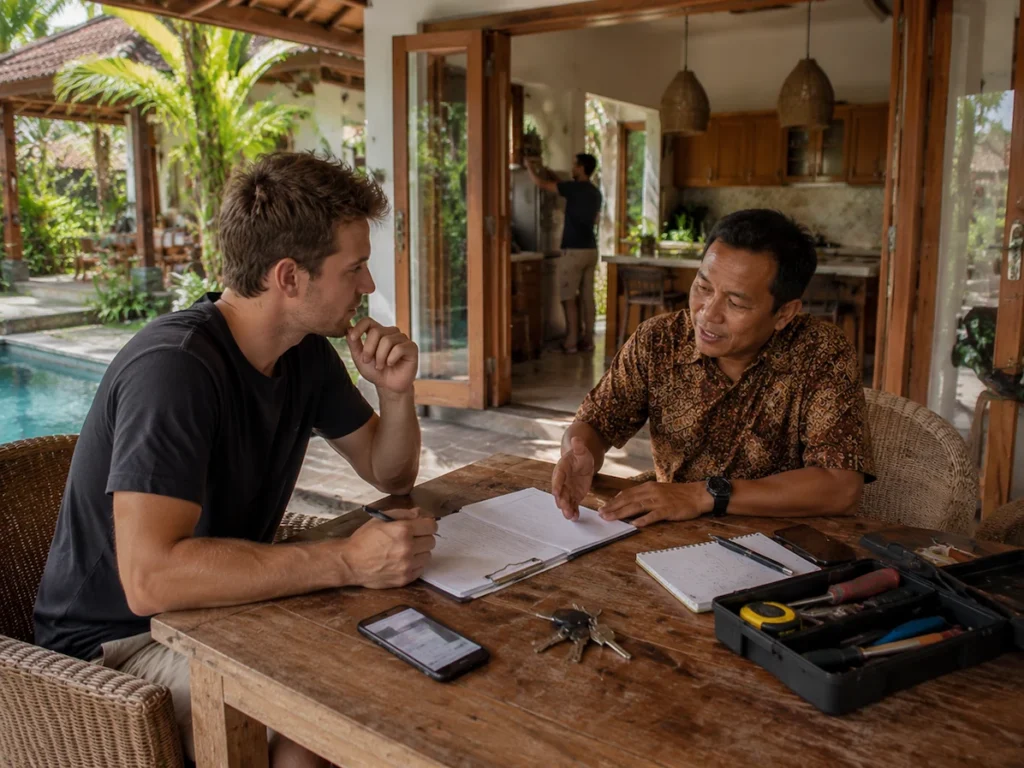
Once you understand the payment terms, the next step is to know what to ask before signing. These are the four questions worth raising directly with your landlord:
- Who Handles Repairs and Breakdowns? Confirm who covers structural repairs and appliance breakdowns, because leases here leave this in a grey area that almost always favors the landlord.
- Is the Kitchen Actually Functional? Walk through the fully equipped kitchen and check each appliance personally. Some villa owners stage these spaces for photos without checking whether appliances actually work day-to-day.
- Can the Landlord Enter Unannounced? Some agreements allow owner visits without notice during your stay. So clarify this upfront or you may have very little ground to stand on regarding your privacy.
- How Does Your Visa Affect the Lease? If your visa renewal falls within the lease period, ask how locals handle that process for foreigners. Many expats discover too late that their lease and visa timelines don’t line up the way they assumed.
We’ve worked with enough people relocating to Bali to know these questions rarely come up until something goes wrong. By the time they do, there’s usually very little room to negotiate.
Ready to Rent Smart in Bali? Start Here
Living in Bali is one of the most rewarding moves an expat can make. Stunning beaches, rich nature, a warm community, and a work-life balance that most people spend years chasing. But that experience belongs to the people who did their research.
And that research has a learning curve. Visa timelines, yearly payments, access roads, and utility fees are details that never show up in a listing. Each detail you verify early is one less cost to absorb later.
Ready to make the move? ibrcbali.org connects you with people who know the island and help you plan around what Bali actually requires. Our team has helped dozens of expats and digital nomads settle into long-term living here without the expensive surprises.
Reach out today, and we’ll make sure you arrive in Bali fully prepared.