
You can compare Bali neighbourhoods by commute times, daily errands, and how close the good schools are. Those three filters sort the island more quickly than any photo gallery, and they still hold up after your first month.
Generally, most people moving to Bali pick an area from a rental listing, then spend the next year driving 40 minutes for a pharmacy run. At IBRC Bali, we see that mistake repeat with families who never checked the route before signing.
This guide walks you through traffic patterns, everyday services, and school access across the island’s most popular areas in Bali. Let’s get into it.
Comparing Commute Times Across Bali’s Main Areas
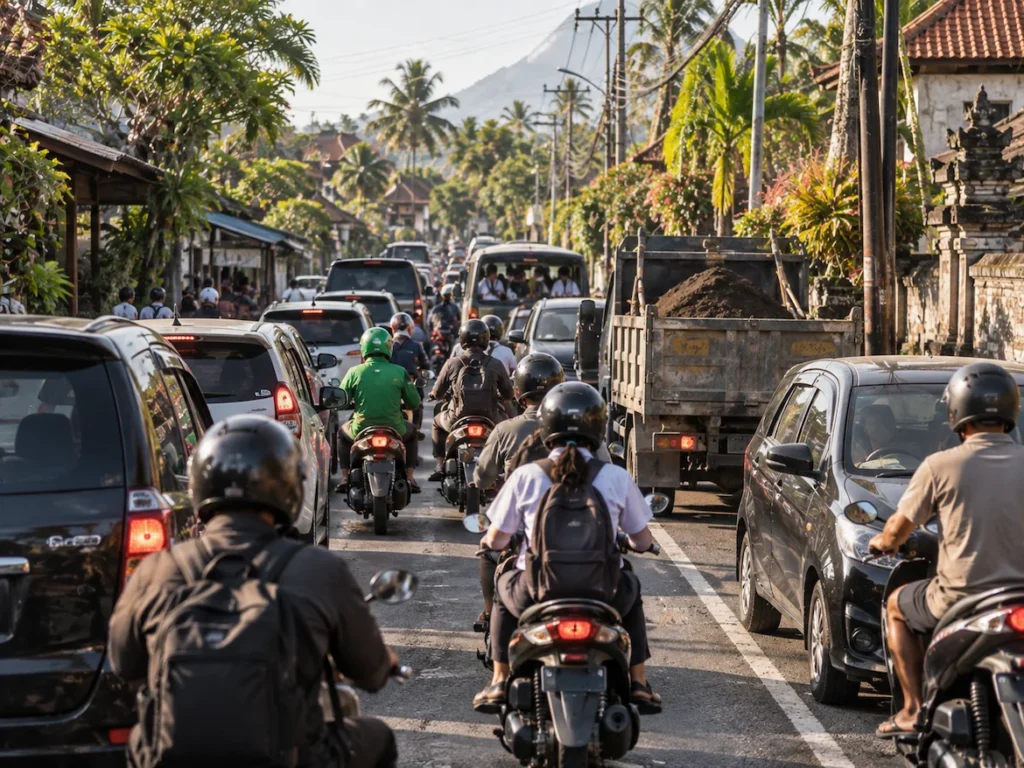
Most newcomers underestimate how much commute time affects daily life in Bali. The island has no real highway system, so a 12-kilometre trip can take 25 minutes or a full hour depending on when you leave.
Three factors decide what your daily drive really costs you, and each one is worth checking before you sign a lease.
How Traffic Changes by Time of Day
Traffic in Bali peaks between 7 AM and 9 AM, when school runs, construction trucks, and delivery scooters all squeeze onto the same two-lane roads.
After that rush, the roads loosen until about 4 PM. So errands you run between 10 AM and 3 PM move at roughly double the speed.
Later in the day, sunset traffic near the beaches builds again from 5 pm, and anyone heading toward Seminyak at that hour should plan for a slow crawl (we’ve sat through plenty of those).
Distance to Ngurah Rai Airport and Sanur
Ngurah Rai Airport sits in the south, so Kuta and Nusa Dua reach the terminal in 15 to 30 minutes on a normal morning.
From Canggu, the same trip stretches to 60 or 90 minutes, and Ubud adds even more once the Sukawati bottleneck fills with trucks.
Sanur, however, counts for a different reason. Fast boats to Nusa Penida and Nusa Lembongan leave its port before 9 AM, so an early ferry means an early start.
Why Motorbike Access Beats Straight Line Distance
A motorbike beats straight-line distance every time, because it slips past the car queues that can make a 9-kilometre trip take 40 minutes.
Road width also affects how easily you can get around. Although Google Maps may show the main route, it doesn’t always account for Bali’s narrow village lanes, known as gangs. These lanes can provide shorter local routes.
So if you’re renting a villa down a dirt track beside the rice paddies, ask how wide the access lane gets once the wet season arrives. The answer will show how easily a car can reach the villa and if you’ll need a motorbike for daily travel.
Daily Needs Look Different in Every Bali Neighbourhood
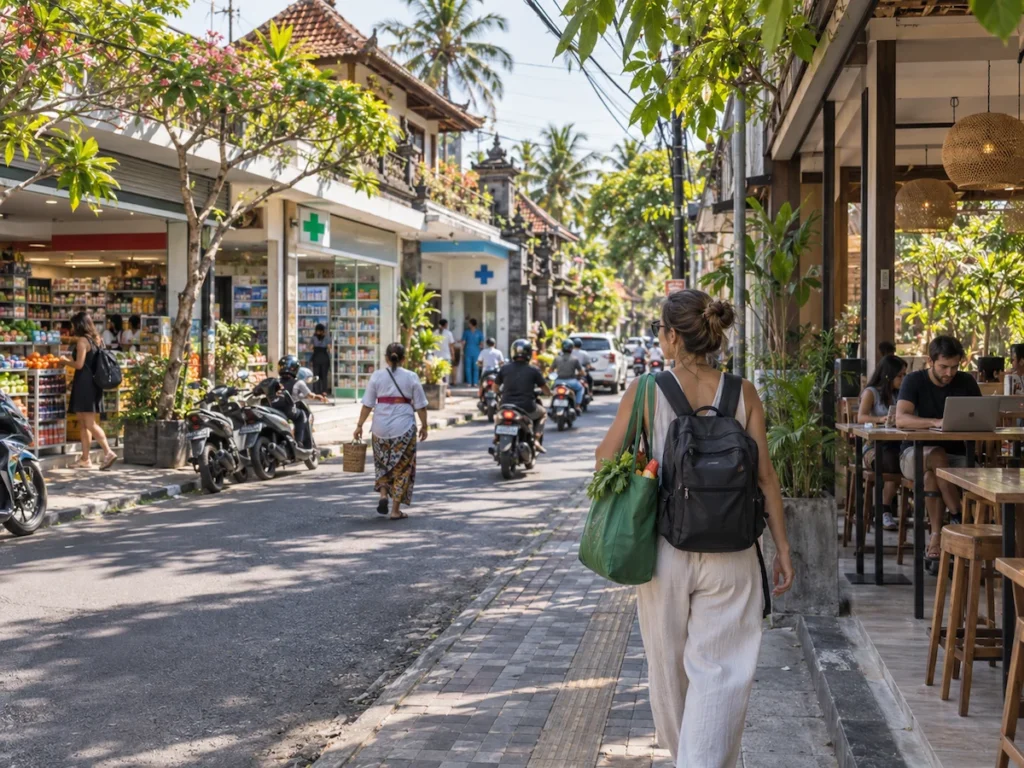
Matching your daily needs to a neighbourhood saves hours of driving every single week. Groceries, a walk-in clinic and a decent desk influence your week far more than the view from the pool does.
The table below lines up six popular areas against the four errands you’ll repeat most:
| Neighbourhood | Grocery access | Clinic access | Coworking spots | Pharmacy distance |
|---|---|---|---|---|
| Canggu | Mini-marts on every street | 24-hour clinic on the main road | Six or more, all busy | Under 3 minutes |
| Seminyak | Full supermarkets | Private hospital, 10 minutes | Three quiet cafes with desks | Under 5 minutes |
| Ubud | Local markets, one large store | Small clinic, hospital 40 minutes | Four spots, calmer hours | 5 to 10 minutes |
| Uluwatu | Limited, stock up weekly | Nearest clinic 20 minutes | Two spots near Bingin | 10 to 15 minutes |
| Kuta | Supermarkets everywhere | Two hospitals nearby | Few, mostly hotel lobbies | Under 3 minutes |
| Nusa Dua | Resort-priced, one big store | Resort doctors on site | Almost none | 5 to 10 minutes |
In practice, Ubud and Uluwatu trade convenience for silence, so budget one big stocking-up run each week and keep a basic first aid kit at home. Meanwhile, Canggu and Seminyak hold everything within 10 minutes, which is why digital nomads cluster there (and why rents climb every season).
Which Bali Areas Work Best for School Runs?
Canggu, Ubud and Sanur tend to work best for short, predictable school runs. But term time changes the math, because thousands of families move through the same 15-minute window every morning.
With that in mind, compare the three main school belts before you shortlist places to stay.
- Canggu: Several international schools sit within a 10-minute ride of each other, though the drop-off queue on Jalan Pantai Berawa backs up by 7:30 AM.
- Ubud: Expect shorter drives and a slower pace, which suits younger kids and the early starts that primary timetables demand.
- Sanur: Flat, quiet roads make a cycling or scooter school run realistic, even for parents who’ve never ridden before.
- South Bali areas: Once you add Kuta traffic, the same 8 kilometres can cost 40 minutes each way during term time.
Verdict: Choose the school first, then draw a 15-minute circle around it and search only inside that line. That single step removes most of the stress from your first term, since you won’t spend hours each week dealing with long and unpredictable school runs.
Stay in Bali Near Good Schools: Ubud, Canggu and Seminyak Compared
Now that you know the daily needs test, let’s rank Bali’s top areas for school families.
Ubud ranks first among the best areas for calm mornings, with campuses tucked between rice terraces. Plus, it includes a drive that rarely takes more than 20 minutes. Rents sit lower than the coast too, so the same budget buys a garden instead of a shared pool.
After that, Canggu comes second and wins on choice, with three well-known international schools. This area also has several pediatric clinics, and the island’s thickest run of beach clubs sits inside one small place. We’ve helped families settle here who loved the convenience, then moved 2 kilometres inland within a year to escape the noise.
Seminyak lands third for schools but beats both on services, with hotels, full supermarkets and specialist doctors all a few minutes from the door. But the catch is evening traffic, because Jalan Raya Seminyak funnels most of the south’s outbound flow straight past your gate.
One detail worth checking in person: school bus routes change every year, and a route that passes your street now may not run next August (ask the school office, not the agent).
Weighing Uluwatu, Kuta and Nusa Dua Against Your Daily Routine
Uluwatu’s cliffs look stunning until you’re stuck in traffic every morning. All three southern options solve a different problem, and picking the wrong one costs you an hour every day.
After we’ve settled the school question, weigh each one against the routine you’ll repeat five days a week.
Comparing Cliff Living in Uluwatu to Beach Life in Kuta
Uluwatu sits on the Bukit Peninsula, where cliff roads separate each cove, and a friend living 2 kilometres away still takes 15 minutes to reach.
Kuta trades that drama for density. So a pharmacy, a laundry and a cheap warung all sit within walking distance of most streets you’d rent on.
However, the cost is noise, since Kuta’s bars run past midnight and the airport flight path crosses the northern edge of the area most evenings.
Why Nusa Dua Suits Families with Younger Kids
Nusa Dua suits younger kids because it’s the one part of Bali planned as a resort zone, with wide sidewalks, streetlights, and calm beaches.
Additionally, gated complexes and hotels set the pace here, which keeps traffic slow enough that a 6 AM walk with a toddler feels safe.
If your children are under eight, that predictability is worth more than a trendy address and a shorter ride to a beach club.
A Quick Guide to Choosing Between the Three
Pick Uluwatu if you work from home and surf, while Kuta if you want everything walkable and cheap. You can also stay at Nusa Dua if young kids set your schedule.
Quick Tip: Rent for one month in your shortlist area before you commit to twelve. Every family we’ve advised who skipped that trial regretted it by month three, usually over traffic they never saw on a holiday visit.
Finding Your Best Fit in Bali
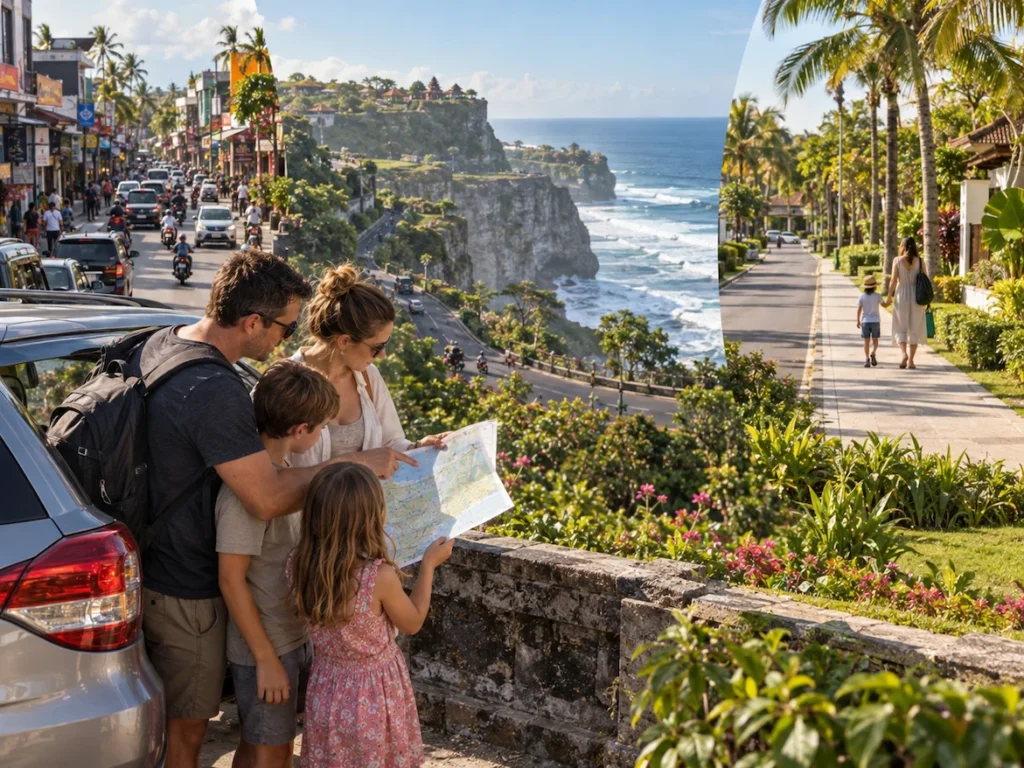
Commute time, daily errands and the school run tell you more about a neighbourhood than any listing photo ever will. Run all three checks and your shortlist narrows itself down quickly:
- Morning and evening commute times
- Access to groceries, clinics and pharmacies
- School-run distance during term-time traffic
Drive your likely routes at 8 am and again at 5 PM before you sign anything longer than a month. Then rent short before you rent long.
Ready to plan your move with less guesswork? IBRC Bali shares relocation guidance for families and remote workers choosing the best places to settle on the island. Contact us today for a hassle-free move.