
A professional relocation quote should list every service, fee, and cost tied to your international move. You should be able to see transportation, labor, packing, and extra charges clearly laid out so you know exactly what you’re paying for.
An $8,000 quote can turn into a $12,000 bill on moving day if you miss what’s buried in the estimate. Fuel surcharges, packing fees, and insurance gaps are usually mentioned somewhere, just not in a way most people notice before signing.
The good news is that legitimate quotes follow predictable patterns once you know what to look for. This guide breaks down what a proper estimate includes, the three quote types you’ll run into, and the red flags that mean it’s time to walk away.
Let’s start with what should actually be on that quote.
What You’ll See on a Professional Relocation Quote
Professional quotes break costs into specific line items instead of one lump sum. Most estimates organize charges into four categories: transportation, labor, packing, and extras.
Base Transportation Costs
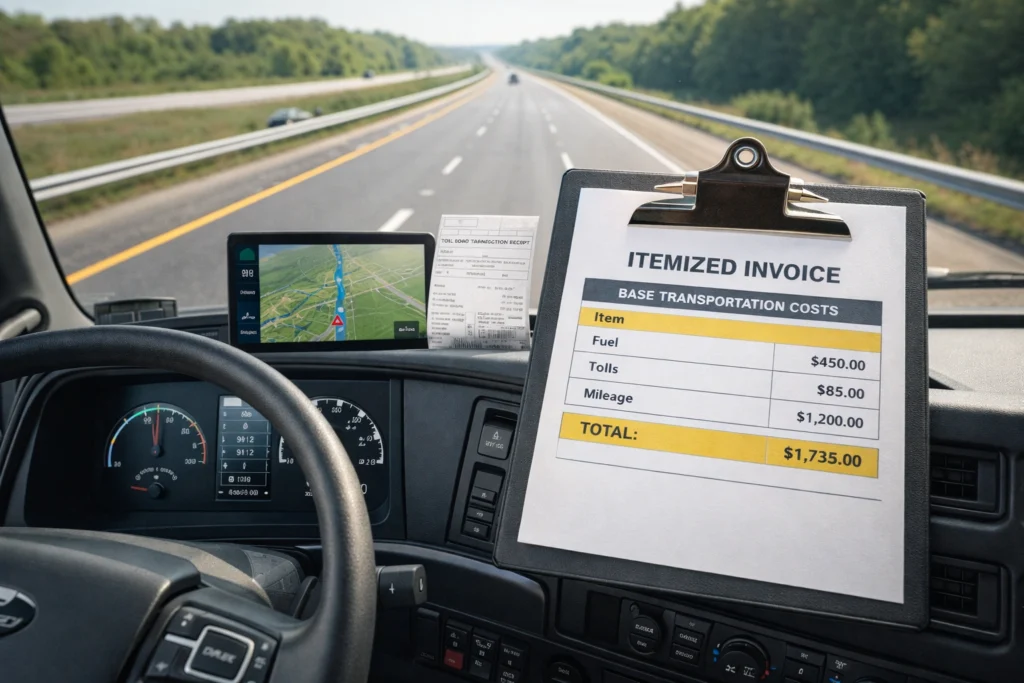
Transportation fees include fuel, mileage, tolls, and bridge crossings. For long-distance moves, this usually appears as a flat rate bundling the truck rental, fuel, and driver costs. Some companies itemize these separately (fuel: $X, tolls: $Y), while others show one “transportation” total.
Either way, verify the number includes all driving-related expenses.
Labor Charges and Hourly Rates
Hourly rates vary by $50, depending on crew size and whether you’re charged for travel time. A three-person crew costs more per hour than two movers but finishes faster, so the total often balances out.
That hourly rate doesn’t tell the whole story. Most companies charge for 2–4 hours minimum, even if your move takes 90 minutes. This minimum covers scheduling and dispatch time. Beyond that, a separate travel time charge covers the movers’ drive from their warehouse to your place and back.
Packing Services and Supplies
Most companies separate material costs from labor hours, which lets you decide how much to handle yourself. For example:
- Full Packing: Movers pack everything, you pay for labor materials
- Partial Packing: You pack clothes and books, movers handle the kitchen and fragile items
- Supplies Only: Buy boxes and tape from the company, do all packing yourself
Each option cuts costs differently, depending on your time and budget.
Extra Fees and Add-On Services
Extra charges kick in when the truck runs into logistical obstacles:
- Stairs: $50-$150 per flight since hauling furniture up three floors takes significantly more effort than ground level.
- Long Carry: $75-$200 when the truck parks 75 feet from your door and movers have to walk the distance multiple times.
- Storage: Daily or monthly fees if there’s a gap between move-out and move-in dates.
Ask specifically what triggers these fees and get the thresholds in writing.
Three Types of Quotes (And What They Actually Mean)
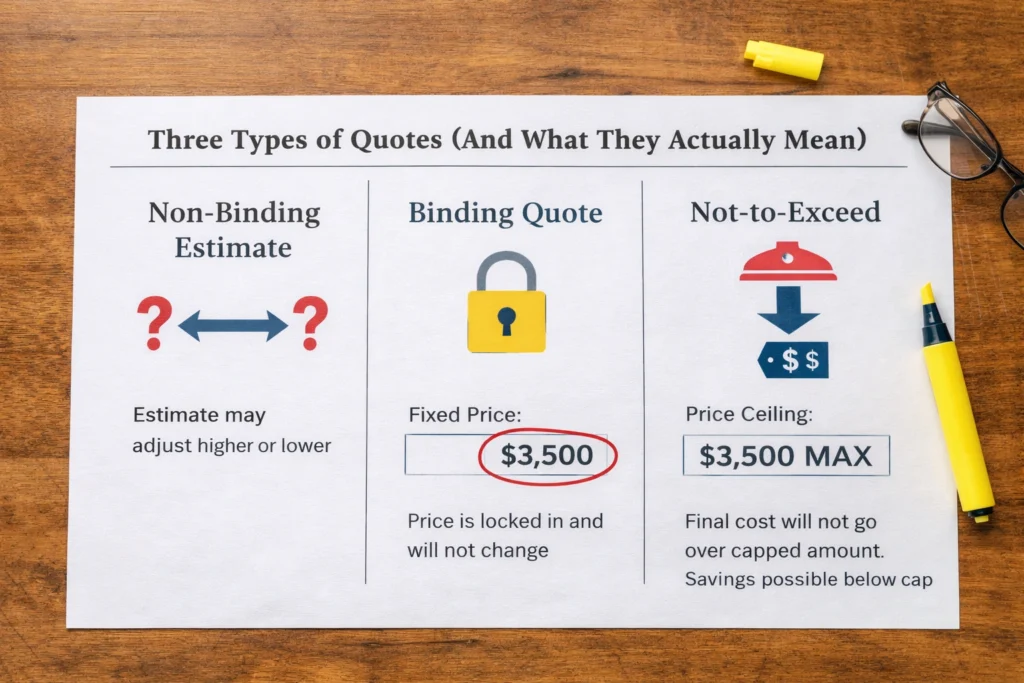
Not all quotes work the same way. Some lock in your price from the start, while others shift based on weight or hours worked.
Moving companies typically use three main quote types, and each one handles cost changes differently. Let’s take a closer look at the three main quote types and how each handles cost changes.
Non-Binding Estimates
Movers inspect your home or ask over the phone to guess the weight and time needed. The final bill adjusts after moving day once they weigh the loaded truck or clock the actual hours worked. Costs go up when you’ve got more belongings than you mentioned or suddenly need services you didn’t discuss upfront. This works fine for small, simple moves where you’re confident about your inventory.
Binding Quotes
Movers create a detailed list of everything you’re taking so they know the exact load before setting the price. The price stays put even if the crew works slower than planned or your stuff weighs more than they thought. Adding furniture later or asking for extra stops will trigger new charges on top of the binding price. International moving companies often prefer this structure because it removes the risk of major cost blowouts on either side.
Not-to-Exceed Quotes
You get a guaranteed price cap. That means you’ll never pay more than the quoted amount, even if complications come up.
If your belongings weigh less or take fewer hours than estimated, your bill drops to match the actual work. This is the safest bet for most people since you get price protection plus a chance to save money. The downside is these quotes sometimes run slightly higher upfront because the company is absorbing the risk of cost overruns.
Hidden Costs That Catch People Off Guard

You agreed on a price, the move went fine, but somehow the final invoice is $400 higher than expected. We hear this all the time from people who didn’t catch the fine print.
Often, the main culprit is an elevator fee. It’s a charge your building might require for reserving service elevators or providing insurance certificates on moving day. Some buildings charge the moving company directly, and that cost gets passed straight to you.
Then there’s the shuttle fee if your street is too narrow for standard trucks or parking is too far from your door. Moving companies use smaller vehicles to bridge the gap, and that extra handling can add up to $200-500, depending on distance.
Insurance is another gap most people miss. Basic coverage typically pays about 60 cents per pound for damaged items. That $2,000 laptop? You’d get roughly $3 if something breaks. Full-value protection can cover it, though it costs extra based on your shipment.
On top of transportation and labor, international moves bring customs fees, port charges, and destination delivery costs that don’t always show up clearly in the initial estimate. Some companies bundle these; others list them separately or forget until the final bill.
To avoid surprises, ask exactly what’s included and what isn’t and get it in writing.
The Home Survey: How Movers Build Your Quote
Most moving companies send an estimator to your home to see what needs moving. They might visit in person or do a video survey, depending on the company.
For an in-person visit, the estimator walks through every room, checks stairs and elevators, and notes items requiring special handling, like pianos or artwork. They use this information to calculate labor hours, truck size, and packing materials for your specific move.
Video surveys work when an in-person visit isn’t possible. You walk through your home with your phone while the estimator watches remotely and asks questions about your belongings. Accuracy depends on how thoroughly you document your belongings during the call.
Either way, show the estimator everything you’re taking: closets, garage items, attic boxes, and basement storage. Movers can’t quote accurately on what they don’t see, and missing items often lead to surprise charges on moving day.
Red Flags When Comparing Moving Companies
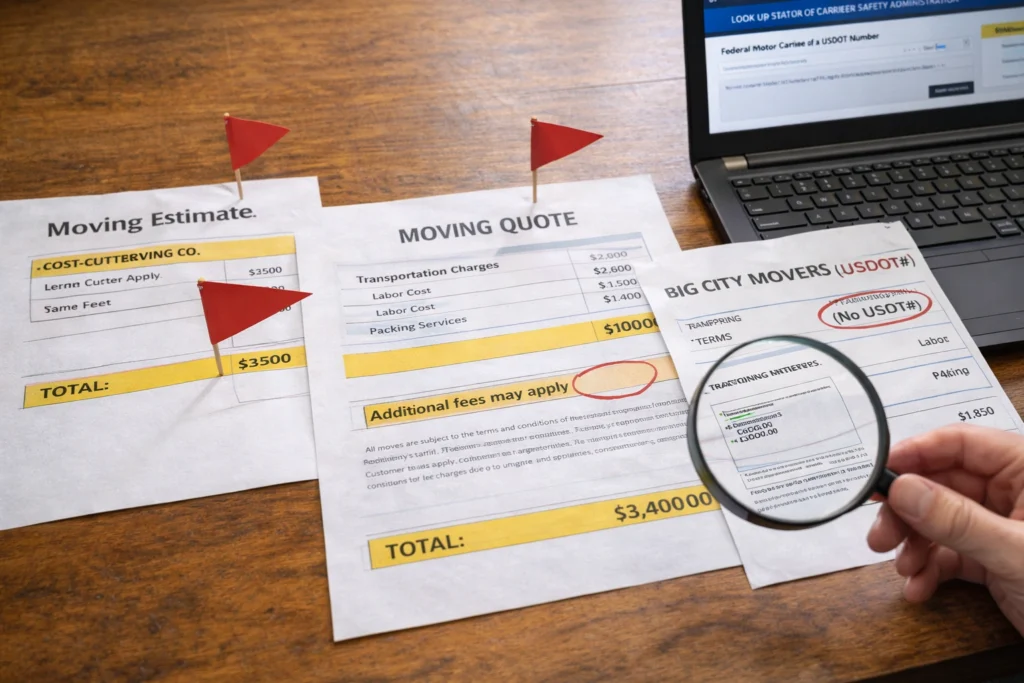
One sketchy moving company can turn your relocation into a hostage situation where your belongings sit in a truck until you pay double the original quote. Here’s what to watch for when you’re getting estimates:
- Suspiciously Low Quotes: If one estimate is thousands below the rest, it’s usually missing costs rather than a genuine bargain. Some movers underquote to win the job, then jack up the price on moving day by claiming your stuff weighs more, needs extra labor, or requires “mandatory” services they never mentioned upfront.
- No Written Breakdown: Legitimate movers provide detailed quotes showing exactly what you’re paying for. If a company only gives verbal estimates or says they’ll “figure it out on moving day,” walk away.
- Missing USDOT Number: Interstate movers need this federal registration to operate legally. Without it, they’re not allowed to move your belongings across state lines. You can verify any company’s USDOT number on the FMCSA website in about 30 seconds.
- Large Upfront Deposits: Anything over 20% is unusual and often signals a scam or cash flow problems. Reputable movers ask for a small deposit to reserve your date, then collect the balance after delivery.
- Vague Fee Language: See a quote that mentions “additional fees may apply” without any details? That’s a red flag because you’re wide open to whatever charges they decide to add later. Ask specifically what situations would trigger extra fees and get those answers in writing before you sign.
If you spot even one of these issues, keep looking for a different company.
Getting Your Quote Right
A detailed relocation quote protects you from surprise costs and helps you plan your international move with confidence. The best moving companies break down every charge, explain their quote structure upfront, and answer your questions without pushing for a quick signature.
Before you commit to any mover, compare at least three quotes and verify each company’s licensing. Check what’s included in the base price versus what costs extra. If something feels off or a company pressures you to sign immediately, that’s your signal to move on.
Planning an international relocation? Get in touch, and we’ll connect you with professional movers who provide clear, detailed quotes for your specific move.