
Children moving abroad often show signs of anxiety, mood swings, or a sudden pullback from family routines before they settle in. You’ve likely seen it already: more clinginess at bedtime, less chatter at dinner.
We get it. Juggling visas, packing, and a struggling kid all at once is hard. That’s why we’ve spent years helping families through international relocations, learning which small changes help kids feel steady again.
Let’s use that experience to ease what worries you most. In this article, we’ll cover what’s happening emotionally for your child, how to prepare them for the move, and what routines help once you land.
The Value of Early Conversations Before the International Move
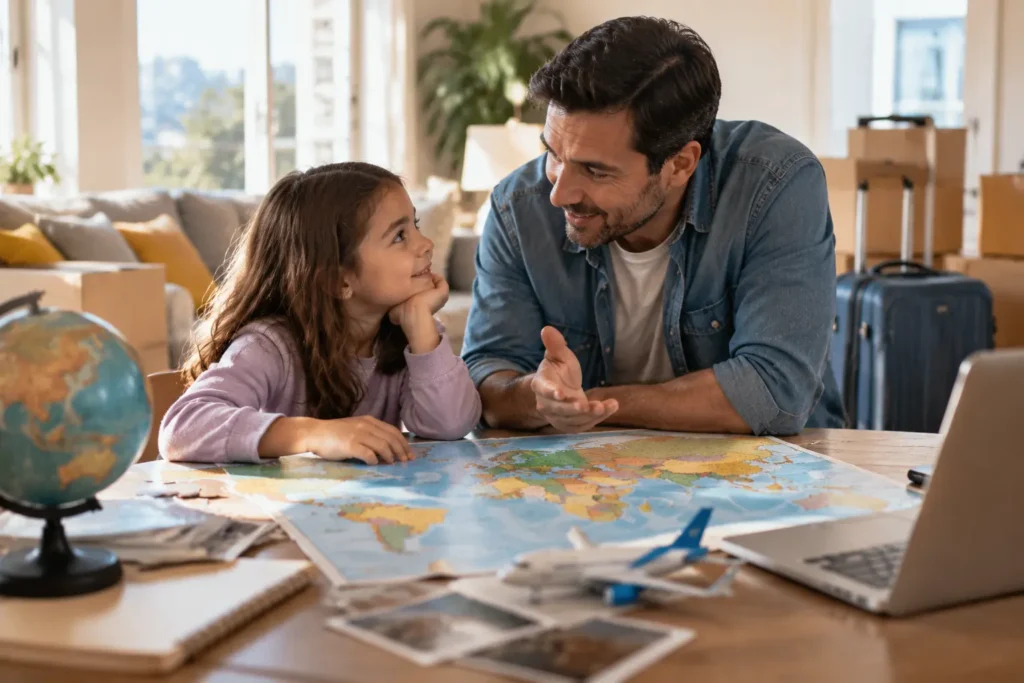
Ever wonder why some kids adjust overseas in weeks while others struggle for months? Sometimes all it takes is one conversation before the move to change how a kid settles into a new country. And this works best when you break it into three simple steps.
- Start the Conversation: Bring it up two to three weeks before the move, rather than the night before. Kids need time to ask questions, get upset, and come around on their own.
- Share the Specifics: Vague reassurance doesn’t help. Tell them the destination country, the actual moving date, and what their new room might look like once you’re there.
- Let Them Ask Anything: Make space for questions, even the uncomfortable ones like “Will I ever see my friends again?” Answer honestly and reassuringly.
Several short talks tend to work better than one long, perfect conversation. One family we worked with turned the weeks before their move into a countdown calendar on the fridge, and their son crossed off every single day.
Choosing International Movers Your Whole Family Can Rely On
An international move means customs paperwork, longer transit times, and fragile items sitting in a container for weeks. It’s natural to be extra careful with paperwork here, since even one missing form can hold your shipment at customs for days.
Which is why it’s worth comparing moving companies on their packing methods and their track record with deadlines.
Crating Fragile Items for Long Transit
When you’re vetting a moving company, ask how they pack fragile items and don’t just take their word for it. Custom crates and proper containers are what keep a teacup safe on a trip that long.
After coordinating dozens of overseas relocations, we’ve found the professional international movers who explain their packing process before you even ask are worth hiring.
One Timeline Everyone Can Count On
A predictable timeline from your moving services team means you can focus on your kids instead of managing logistics yourself.
That plays out in the little moments, like when your kid asks “when” a lot more than “where” during a move. In fact, you’ll probably hear “are we there yet” about the new house before you’ve even left the old one.
What to Expect During the Relocation Process

Expect packing day, a long flight, and a few final goodbyes to close friends. Of those three, packing day tends to be the first surprise, since boxes always take longer to fill once a curious toddler starts “helping,” unpacking one box while you’re taping up another. It helps to leave extra room in your schedule for this.
With the boxes finally sealed and loaded, the true challenge begins at the airport. Longer overseas relocations often mean overnight layovers (an 11 PM layover tests everyone’s patience). By the time the second flight boards, patience is running on fumes for everyone, kids included.
The best way to soften all of this is with a plan. A written moving plan, with clear dates and times, will give your child something to count down to. Each stage feels less like a mystery once your child knows what’s coming.
New Routines: How to Help Kids Settle In

A new home starts to feel familiar the moment daily routines return. Something as simple as a normal dinner at a normal time tells a kid’s brain that things are stable again, a point supported by the CDC’s advice on building consistent routines.
Try these three things first.
- Predictable Beats Perfect: Set the same wake-up, meal, and bedtime schedule for the first two weeks. It’ll feel rigid at first, but kids notice the pattern before most parents do.
- Pick One Ritual: Consider a 7 PM dinner or Saturday pancakes. Either one works, as long as it repeats every single week and becomes something your child can count on.
- Say Yes to Exploring: Kids ask to wander once things feel steady, maybe a new activity, maybe just a walk around the block. When they do, let them.
Every family finds its own rhythm for getting back to daily life. Some settle in within a week, others take a full month, and both are completely normal.
What Makes a New School Easier or Harder for Kids?
A supportive teacher and one early friendship often decide how a child feels about a new school. That early support builds the confidence kids need to handle everything else that feels new.
For a clearer view, we’ve laid out the main factors below.
School Factor | Why It Helps |
Early Friendships | A child who knows one classmate by name has someone to sit with at lunch, which removes a major source of first-day anxiety. |
Teacher Check-ins | This action builds trust and helps catch struggles before they grow |
Familiar Routines at School | When the school day follows a clear structure, it reduces the shock of a new environment |
One useful question to ask the school directly: how do you help new students make their first good friend? Through our practical knowledge working with relocating families, schools with a specific answer, like a buddy system or a welcome group, tend to be the better fit.
Every Move Gets Easier From Here
As we’ve covered, helping a child adjust after an international move takes real effort, and every family finds a different rhythm along the way. The right choices, made at the right time, decide how that transition feels.
To save you some trial and error, this article covers the emotional impact of relocating and what to expect along the way. It also looks at routines and school support that help kids settle in.
Our blogs at International Blog – Relocating Countries cover more tips like these for families relocating overseas. We’ve already written about international driving permits and how to make relocation feel less overwhelming.
Let us know what topic you’d like us to cover next.