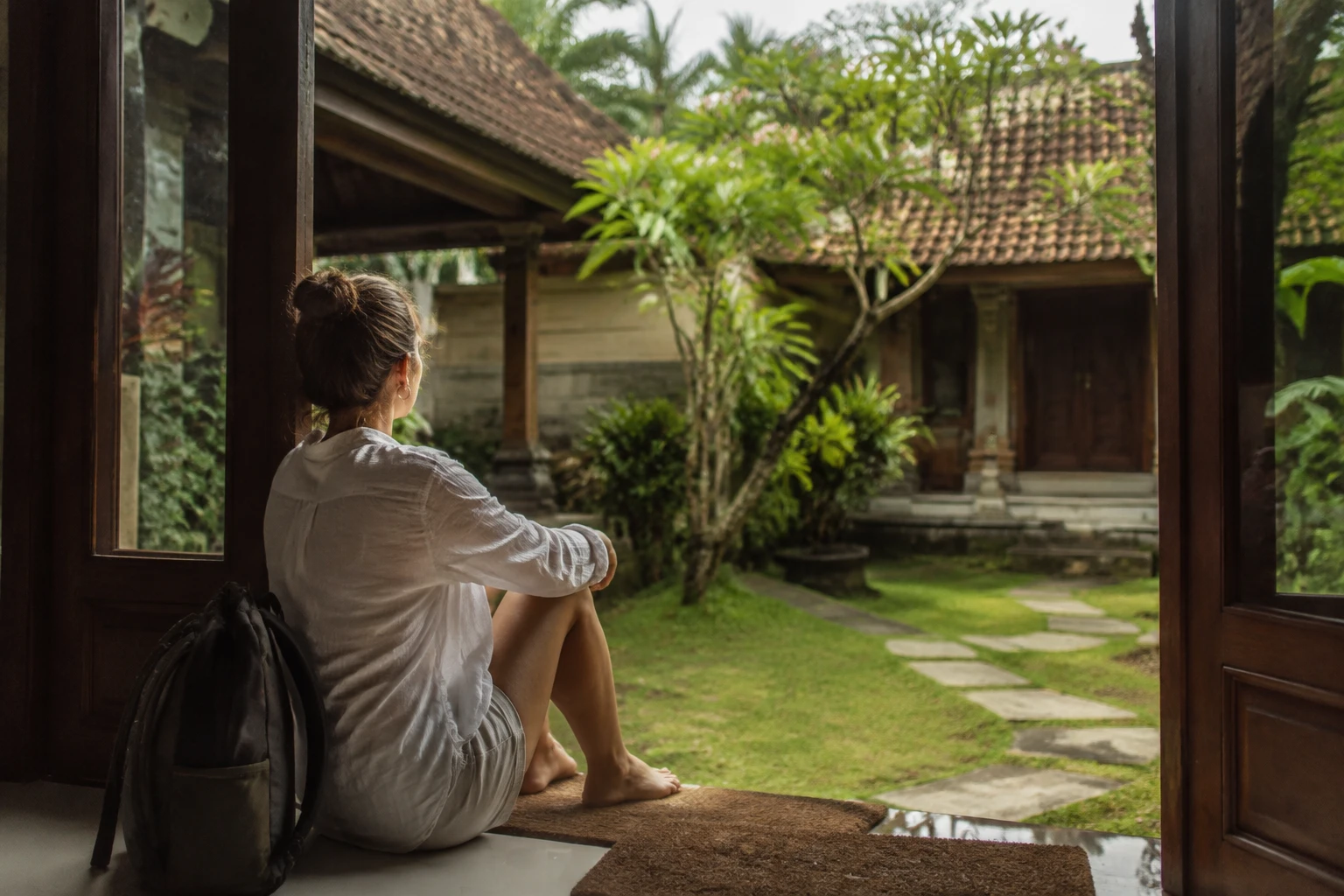
Get access to cash, set up a local SIM, confirm your accommodation, and work out how you’ll get around. These are the first things to sort out after moving to Bali because they make everything else easier.
Only then can you turn your attention to the less urgent tasks. Sounds simple enough, right? But most people arrive after a 20-plus-hour journey, jet-lagged and running on airport coffee.
Sorting out logistics is probably the last thing anyone wants to do right then. Small tasks slip through the cracks when you’re running on no sleep and trying to process a new environment at the same time.
We made this guide to help you avoid exactly those problems. It breaks down what to handle first, what can wait, and the few deadlines you don’t want to overlook during your first 72 hours.
Get Cash and a Local SIM Card Sorted First
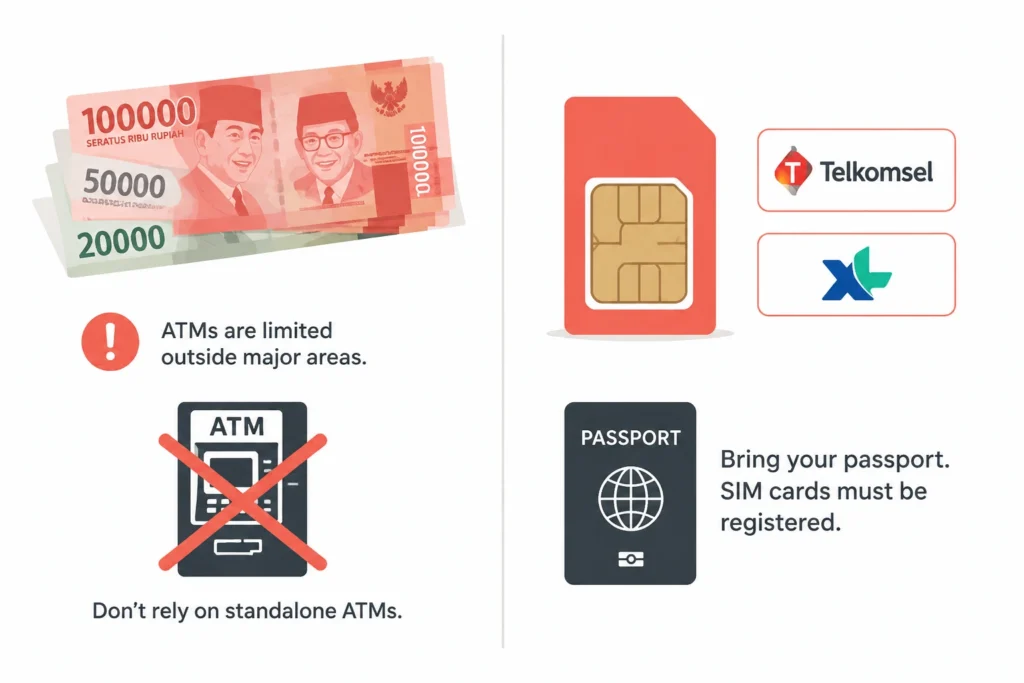
Cash first, because Bali runs on it. Most warungs (local food stalls), market vendors, and local shops don’t take cards. Even in Seminyak or Canggu, plenty of places that look like they’d have a card machine don’t. Having some rupiah on you from the moment you arrive removes friction from everyday purchases.
When you need more, steer clear of standalone ATMs and unlicensed money changers offering unusually good rates, as scams involving both are common.
Then sort out your SIM. A local connection gives you access to maps, ride-hailing apps and messaging without relying on Wi-Fi. Telkomsel and XL are two common options, and you can buy a SIM at the airport or from local phone shops. You’ll need your passport to register it, so keep it handy.
Confirm Your Accommodation and Get Familiar With the Area
Even if you’ve prebooked your accommodation, confirm the details when you arrive. Check that the price, included amenities, and check-out date match what you agreed to. If something is wrong, it’s much easier to sort it out while you’re still checking in than when you’re trying to leave.
Once you’re settled, spend an hour walking the immediate area. Find the nearest ATM, a warung or convenience store, and the main road you’ll use to get around. You don’t need a map for this. Walk in one direction for fifteen minutes, then turn back. By the end, you’ll know where you are, what’s nearby, and which streets you’ll actually use.
This short walk also helps you pick up on local customs early, like removing your shoes before entering certain shops or temples nearby. Say hello to people you meet along the way, too. You’re learning the area while getting to know the people around you.
Sort Out Your Transport for the First Few Days
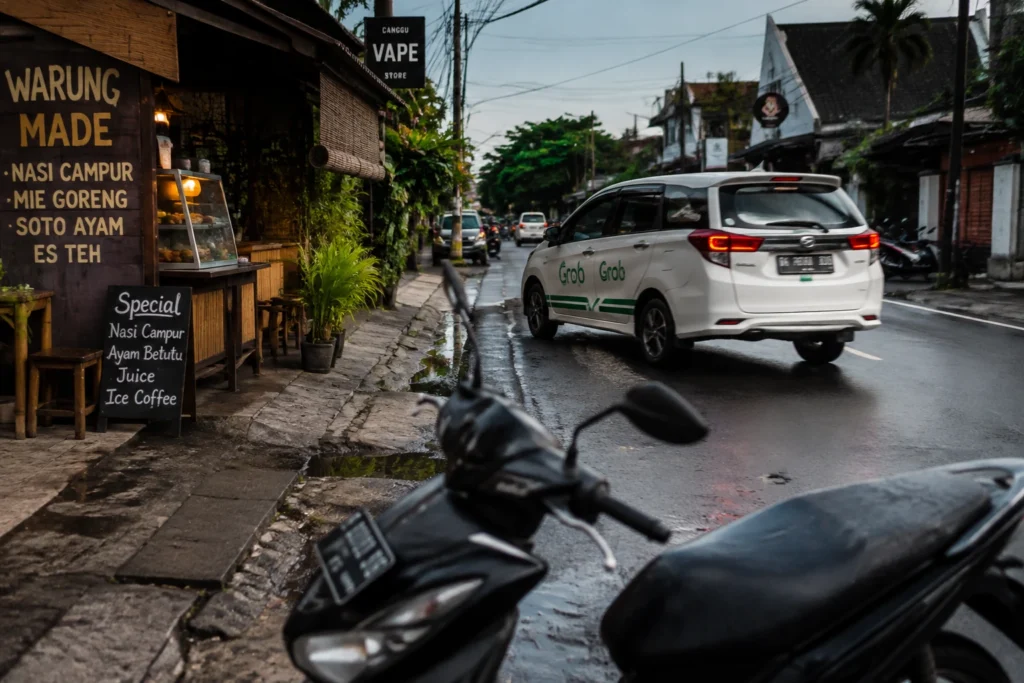
This may come as a surprise, but transportation is one of the easiest things to put off and one of the first to cause problems.
Many new arrivals assume ride-hailing apps will cover everything, so they don’t think much about transportation until they actually need to get somewhere. That works fine most days. But on a rainy afternoon when every nearby driver is booked, you’ll wish you had a backup plan.
One of our clients learned this the hard way. She relied on ride-hailing apps for her first three days, then got stranded near Ubud during a downpour with no scooter, no driver, and a phone battery running low. Since then, we’ve always told new arrivals to have at least one backup option ready from day one.
Here are the main options to consider:
- Use Gojek or Grab for Short Trips: These are two of the most commonly used ride-hailing apps in Bali. You can use them to book a car or motorbike, see the fare before you confirm, and pay through the app or with cash. They’re particularly useful during your first few days, when you’re still learning the area and figuring out which routes make sense.
- Hire a Private Driver for Longer Trips: This will cost more than using a ride-hailing app, but you get a driver who knows the area and can stay with you for the day. Just make sure you’re booking through a reputable service or someone with reliable recommendations.
- Rent a Scooter for Freedom: If you’re comfortable riding and want more freedom to explore, renting a scooter can be the easiest way to get around. Ask your accommodation host or landlord to recommend a reputable rental shop, or look for one with strong local reviews. It typically costs around 60,000 to 110,000 rupiah per day, and you’ll need the appropriate motorcycle license and international driving permit to ride legally.
You don’t have to make a permanent choice in your first few days. Start with whatever feels manageable, then change your transport once you’re more familiar with the area.
Check Your Visa Extension Deadline
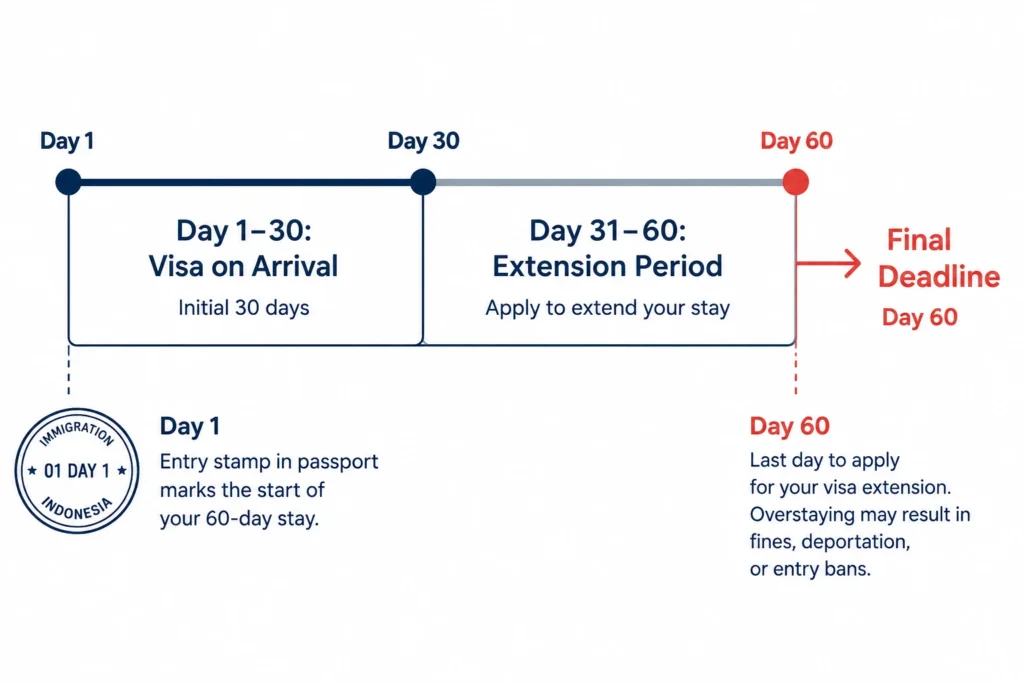
Your 30-day Visa on Arrival period starts from your date of entry, so check the entry stamp in your passport and count forward to find your exact deadline. Write the date somewhere you’ll see it regularly.
Don’t rely on remembering roughly when you arrived; you need to know the specific day your stay expires.
If you’re staying beyond those first 30 days, you can extend a Visa on Arrival once for another 30 days. That gives you a maximum stay of 60 days. You can handle the extension process yourself through immigration or use a visa agent to manage the paperwork for you.
Find Nearby Places for Food, Water, and Medicine
One easy mistake to make when you first arrive is drinking tap water without thinking twice. But tap water is not safe to drink in Indonesia, including Bali. So stick to bottled or filtered water from the start, and check that the seal is intact before you drink it.
Food is easier to sort out. Local warungs serve fresh meals daily, and you’ll usually find food shops or restaurants close to where you’re staying. For medical issues, it helps to know your options before something goes wrong:
- Locate the Nearest Pharmacy: Pharmacies stock basic medications for stomach upset, fever, or motion sickness, and many everyday medicines are available without a prescription.
- Find a Nearby Clinic: Clinics such as SOS Medika or BIMC can handle urgent and non-emergency care. Check which clinic is closest to your accommodation and save its number in your phone, in case of a medical emergency. Your hotel staff or accommodation host can also recommend a nearby option if you’re not sure where to go.
- Find Travel Insurance With Medical Evacuation: Some policies only cover care within Indonesia, so check whether yours includes evacuation and what conditions apply.
You don’t need to memorize every nearby service. Just know where you’ll get safe drinking water, your next meal, and medical help if you need it.
What Can Wait Until After the First 72 Hours?
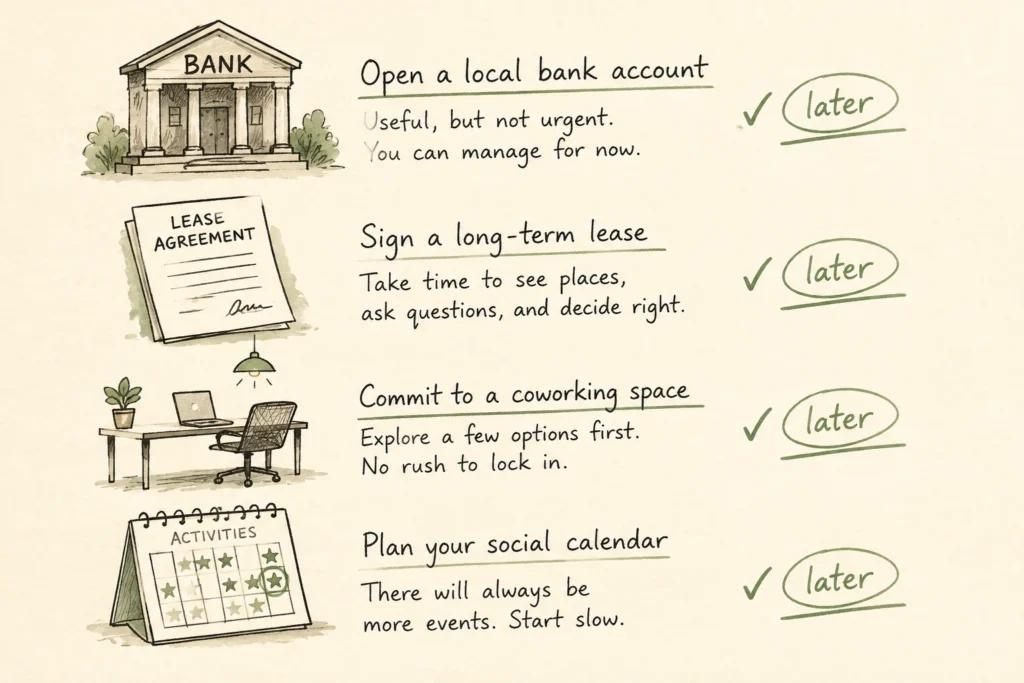
You don’t need to sort out every long-term detail during your first three days. Some decisions are easier to make once you’ve settled in and have a better idea of what you actually need. This includes:
- Opening a Bank Account: Most Indonesian banks require longer-term visa documentation for a standard account, so this can wait until you’ve decided how long you’re staying.
- Finding Long-Term Accommodation: Your first place doesn’t have to be your permanent home. Spend some time exploring different areas before committing to a longer lease.
- Finding a Coworking Space: Work from your accommodation or a nearby cafe for the first few days. You’ll have a better idea of what you need from a workspace once you’ve settled into a routine.
- Booking Activities and Day Trips: There’s no need to fill your first week with plans. Give yourself time to recover from the journey and explore at your own pace.
If you’re planning to stay in Bali long term, you’ll need to deal with these things eventually, just not this week.
Settle In Without the Overwhelm
Getting through your first 72 hours in Bali doesn’t require doing everything at once. Handle cash, your SIM, transport, and your visa deadline first, and let the rest unfold at its own pace. Moving abroad always comes with a learning curve, but most of it gets easier once the essentials are out of the way.
Need help getting settled? Contact the IBR Bali team to find out how we can support you through the practical side of moving to Bali.
Frequently Asked Questions
Still have questions? These are some of the most common questions people have when moving to Bali.
Can digital nomads live in Bali permanently?
Digital nomads can stay in Bali long term, but they need the right visa type for their situation. A tourist visa isn’t designed for indefinite stays, so check the available visa options before making long-term plans.
Do I need an international driving permit when moving to Bali?
Yes, you’ll generally need an international driving permit alongside the appropriate motorcycle or car license to drive legally. Check the requirements before renting a scooter or car.
Is Bali affordable for long-term residents?
Bali can offer an affordable lifestyle compared with many big cities, but monthly costs vary widely by area and lifestyle. Nusa Dua, for example, tends to suit people looking for a more upscale experience, while other areas can be considerably cheaper.