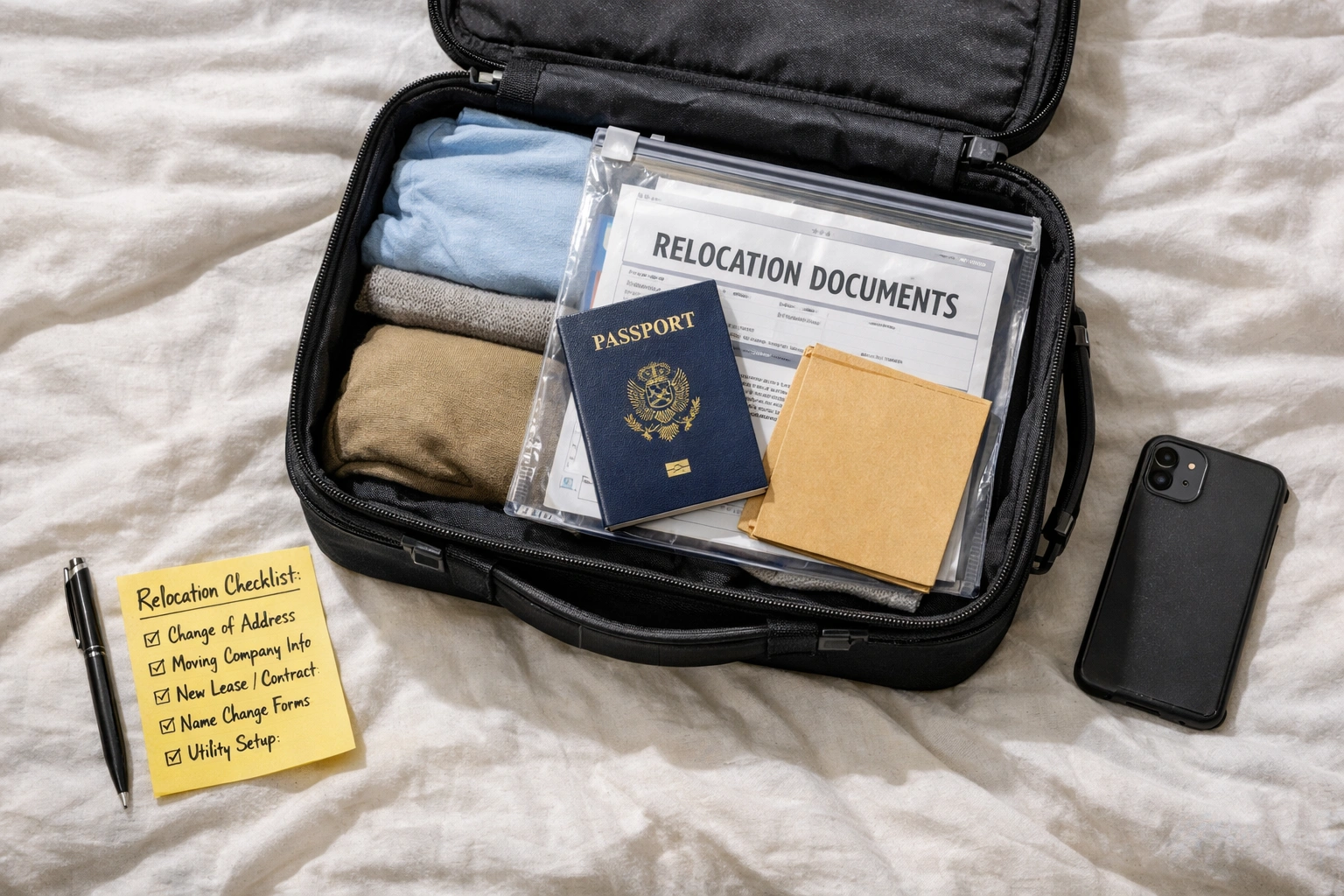
You’re standing at a bank counter in your new city, ready to open an account so you can start getting paid. The clerk asks for your marriage certificate. You pause. It’s in a filing cabinet 8,000 miles away, and you need this account opened by Friday.
This is when paperwork stops being an afterthought. Documents you barely thought about during planning suddenly become gatekeepers. Without essentials like marriage certificates, bank statements, or social security records, opening accounts, signing leases, or completing visa paperwork stalls fast.
The thing is, most people don’t forget these out of carelessness. They’re focused on flights, housing, and shipping, while important paperwork sits in a drawer back home.
The good news? The same short list of documents causes most delays, and once you know what they are, you can prevent weeks of headaches. That’s what this guide covers. You’ll learn exactly what belongs in your relocation folder and why each piece is non-negotiable.
The Documents Everyone Remembers (But Still Gets Wrong)
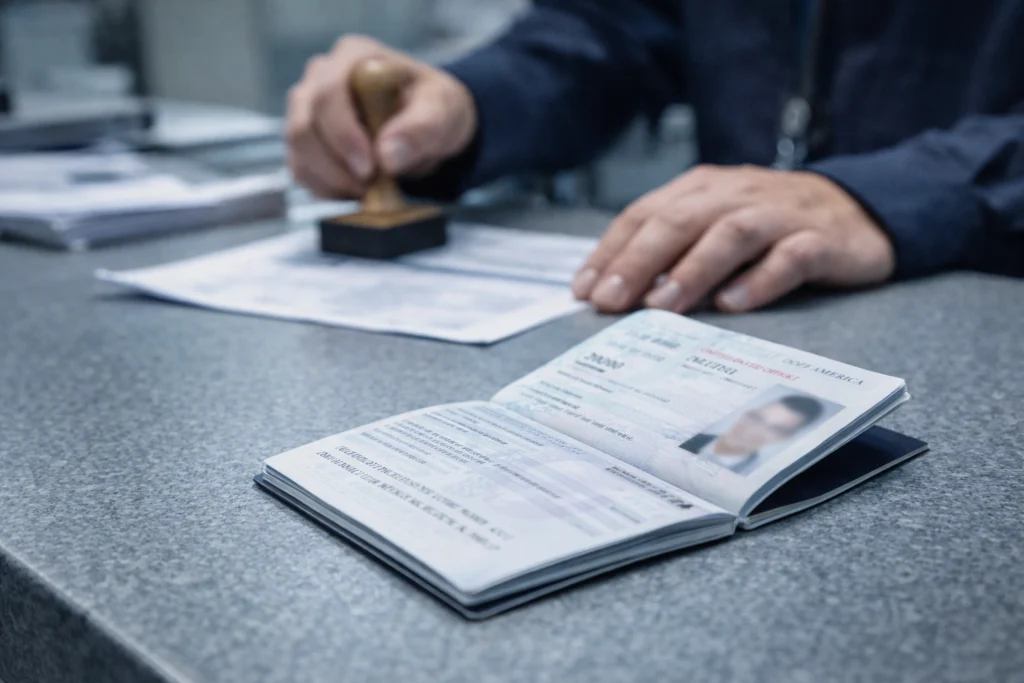
Most people know they need passports and birth certificates, but issues with timing, format, or completeness often catch them when it’s expensive or stressful to fix. Even if you have the documents, they may not meet entry requirements. The three that trip people up most often are:
- Passport Validity: Most countries require at least six months of validity remaining on your passport after your arrival date, not just when you leave. If it expires sooner, you may be denied entry, even if your visa or stay is shorter.
- Birth Certificates: Lost your birth certificate? Replacements can take 6-8 weeks or longer, depending on your state. The timeline stretches even more if you need certified copies for multiple family members or your birth state requires extra verification.
- Apostilled Documents: An apostille is an official certification that verifies a document is legitimate for international use. Many countries require apostilled birth certificates, marriage licenses, or diplomas for visa applications. To get one, go to your state’s Secretary of State office, submit the original document (or a certified copy), and follow their instructions for authentication.
Getting these sorted early saves you from paying rush fees or delaying your whole move.
Medical Records: The Paperwork That Becomes Urgent Fast
Your prescription from home means nothing in a different country. If you want medications, doctors will ask to see your diagnosis, current medications, and dosage before writing prescriptions. Without those records, they start from scratch. That means new appointments, potentially new diagnostic tests, and weeks without your medication while everything gets sorted.
Chronic conditions make this worse. Think blood pressure medications, diabetes management, and mental health prescriptions. These all require continuity. Show up without diagnosis summaries or recent test results, and your new doctor has to rebuild your treatment plan from scratch.
You can avoid most of this hassle with the right paperwork. Get copies of your current prescriptions, a letter from your doctor summarizing your medical history and active medications, and immunization records for the whole family. If you’re on controlled substances, get documentation explaining why you need them. Customs and local pharmacies often require proof before they’ll release these medications.
Moving With Kids or Pets? Don’t Forget These Documents
Moving with kids or pets means extra paperwork, and missing a single document can delay school enrollment or hold up your pet’s travel. That’s why you should make sure your children’s school records are ready for enrollment, and double-check your pet’s vaccination and travel paperwork.
School Records and Transcripts

When you’re enrolling kids in schools abroad, especially private or international programs, they’ll ask for more than just report cards. You’ll need:
- Detailed academic portfolios showing grades, coursework, and any special programs or honors your child participated in
- Immunization records that match the host country’s requirements (some vaccinations require multiple doses spread over months)
- Officially authenticated transcripts (and translations if the school requires them), which can take weeks to process, so start early
Request these documents from your child’s current school at least two months before your move to avoid enrollment delays.
Pet Vaccination and Health Certificates
Your pet needs specific vaccination records and health certificates to travel internationally, and timing requirements vary by destination. For example, EU countries require a 21-day waiting period after a rabies vaccination before entry. Miss that window, and your pet could face weeks of quarantine.
What you need:
- Current rabies vaccination (check your destination’s timing requirements)
- Health certificate from a USDA-accredited vet (issued within 10 days of travel)
- Microchip documentation (required by most countries)
Most airlines won’t accept pets without current health certificates, so plan your vet appointment at least a couple of weeks before your flight.
The Financial Papers That Catch People Off Guard
Most people pack their passports and visas, then get caught off guard when a bank or tax office abroad asks for paperwork they left behind. Here’s what to bring:
- Social Security Cards: You need these for US tax filing while living abroad and some banking paperwork. A lot of people think memorizing the number is enough, but you’ll need the actual card. Without it, you’ll need to get a replacement, which requires an in-person visit to a Social Security office back home (nearly impossible once you’ve moved).
- Marriage Certificates: Your marital status affects taxes and immigration filings in many countries, so you’ll usually need official proof. But a simple photocopy won’t do. Most offices want an apostilled copy for legal recognition. If you don’t have one when you arrive, getting it sent from home can take weeks and add unexpected international costs.
- Bank Statements: Visa applications often require 3–6 months of statements showing you can support yourself. Problems pop up when people close accounts before saving copies. Then they’re requesting records from their old bank while trying to complete visa paperwork. So before you close anything, download and save digital copies.
These papers feel optional until someone asks for them at the worst time, like during a visa interview or a lease signing.
Work Authorization: More Than Just Your Visa

Your visa gets you into the country, but your work permit is what lets you start earning a paycheck legally. It’s easy to confuse the two, but they’re separate documents and work permits often take longer to secure.
Wait times can range from weeks to months, depending on the country and your job type. During that time, you may be in the country but unable to work. To avoid that gap, start the work permit process once your job offer is confirmed. That way, your employer can provide a sponsorship letter with your role, salary, and contract details while you’re still preparing for the move.
Work authorization doesn’t end with your permit. Many professional licenses also need local validation or certification before you can start. Arriving ready to work only to find your teaching credentials, medical license, or other regulated qualifications aren’t recognized can stall your plans for weeks. That’s why it’s essential to check with your industry’s regulatory body in your destination country well before you move.
The “Just in Case” Documents Nobody Thinks About
These documents feel optional when you’re packing, which is why most people overlook them. The problem is that when something goes wrong abroad, missing paperwork can turn medical emergencies, insurance claims, or rental issues into much more complicated situations.
- Living Will and Power of Attorney: If you have a medical emergency during your move and can’t communicate, these documents tell doctors your wishes and give someone authority to make decisions for you. Without them, family members back home may not be able to act on your behalf from thousands of miles away.
- Insurance Coverage Gaps: Health insurance from home often ends when you leave, but your new country’s coverage might not start for 30-90 days or longer. That transition period leaves you exposed. To avoid going uninsured, buy short-term travel medical insurance to cover the gap, or verify your current policy includes international coverage.
- International Driving Permit: Most countries require an IDP alongside your home license to legally rent or drive a car. If you don’t have yours, you can pick one up at the American Automobile Association (AAA) before you leave. Takes about 15 minutes and costs $20.
Keep these documents in your carry-on luggage, not in shipped boxes. You can’t predict when you’ll need them, and waiting for a container to arrive doesn’t work in emergencies.
How to Actually Organize This Relocation Paperwork Checklist
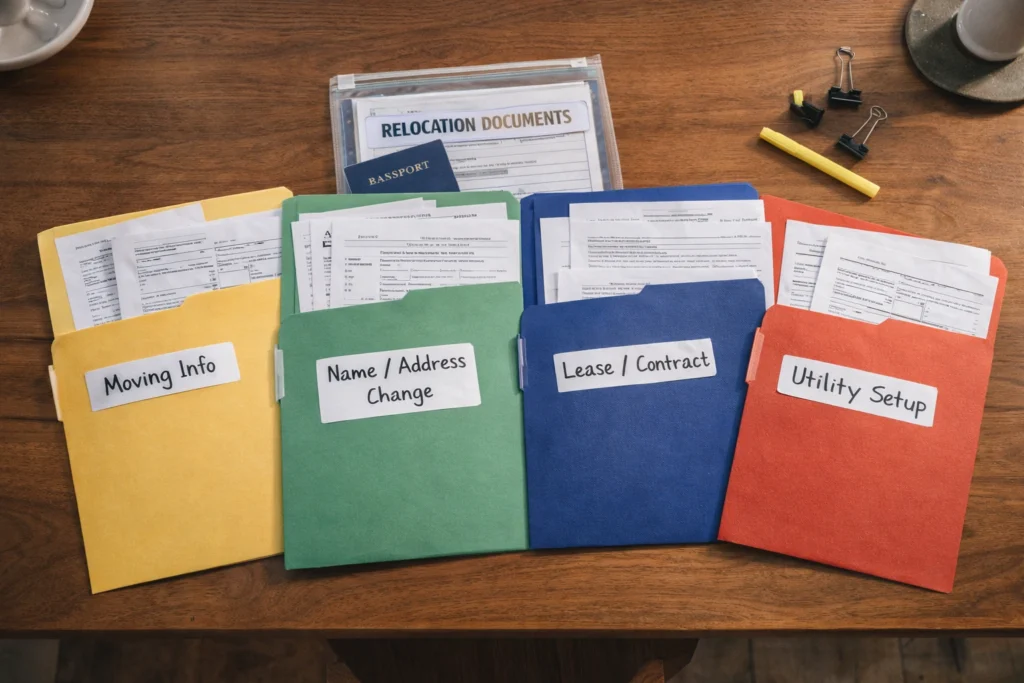
Three steps keep your documents organized during an international move: create digital backups, separate what you carry from what you ship, and track expiration dates.
Step 1: Scan Everything and Store It in the Cloud
Upload copies to Google Drive, Dropbox, or iCloud. If originals are lost or damaged in transit, you’ll have backups accessible from anywhere. Organize scans by category (passports, medical records, financial documents, certificates) so you can find what you need quickly.
Step 2: Separate What You Carry From What You Ship
Carry these documents with you:
- Passports and visas
- Medical records and prescriptions
- Bank statements and financial documents
- Birth certificates and marriage licenses
Everything else can go in shipped boxes, but keep essential documents together in one clearly labeled folder.
Step 3: Check Expiration Dates Now
Passports, visas, driver’s licenses, and medical certificates all expire. Renewing them from abroad can take weeks longer and cost more than handling them before you leave. So mark expiration dates in your phone calendar with 90-day advance warnings to give yourself time for renewals.
Quick tip: Make a simple pre-move checklist listing each document, its location (carry-on vs shipped), and expiration date. This takes about 20 minutes and prevents discovering your passport expires in two months on the day of your flight.
Don’t Let Missing Papers Delay Your Fresh Start
Moving to a new country involves more than just packing boxes. The right documents at the right time determine whether you can open bank accounts, start work, enroll kids in school, or even drive legally. Passports, medical records, work permits, financial papers, and emergency documents all play a role in making your transition smooth.
Start gathering these documents at least 90 days before your move. Scan everything, separate what you’ll hand-carry from what gets shipped, and double-check expiration dates. Small steps now prevent major headaches later.
Planning an international relocation and need help with the logistics? Contact us to learn how our relocation services can make your move to Bali or other destinations less stressful.